http://www.freshforkids.com.au/lunch_box/lunch_box.html
http://www.healthykids.nsw.gov.au/
Someone just mentioned that in Australia it's against the law to send unhealthy lunches to school. I don't know the truth of that or who defines what "healthy" is but nevertheless, I really liked these websites. Toward the end of the Fresh for Kids website there are 3 booklets to download that have a lot of great ideas and pictures.

Monday, August 23, 2010


Sunday, August 22, 2010
Packing School Lunches
I just responded on a list and decided I'd throw this on here also.
One of the biggest things we've figured out is that equipment really helps. As
long as we have a thermos or an insulating lunchbox we can pack just about
anything, hot or cold. It took a while to get it down to what we really liked
and learning how to keep the foods hot or cold.
My favorite equipment is a short stainless thermos. If
we pair the hot thermos food with normal temp foods in an insulating lunchbox it
stays perfectly hot till lunchtime. If it's more of a casserole type food that
can taste ok just warm I like my lock n lock glass containers in an insulating
box.
If we have a cold drink or salad at the same time, I send it in a different
container than the lunchbox with the hot stuff or I just send it with other cool
things.
We've found that a hot thermos of soup along with a cool smoothie and jello
don't mix well in the lunchbox.
Some other favorites that make it easy...
Make lots of sandwiches (minus lettuce and veggies) and freeze them. They'll
thaw for lunch. If you do tuna or other soggy fillings butter the bread first.
I actually LOVE soggy bread when stuff like that thaws.
Make super healthy muffins loaded with flax, oatmeal, whole grains, veggies,
etc. Freeze a couple in a baggie and pop these in instead of a sandwich. I'll
make a quadruple batch at a time.
Hummus freezes well if your kids will eat it with a bread, chips, or veggies
Use the bento box idea and put dinner leftovers in the freezer to space out in
boxes later or just pack it into the lunchbox and stick it in the fridge.
Learn what dinner tastes good cold later if you don't want to heat...spaghetti
and rice taste great with a bit of dressing or sauce on top to refresh it.
Salad with dressing on the side. Any dessert. Even ice cream in a thermos can
work if they're ok with a milkshake by lunch.
One of the biggest things we've figured out is that equipment really helps. As
long as we have a thermos or an insulating lunchbox we can pack just about
anything, hot or cold. It took a while to get it down to what we really liked
and learning how to keep the foods hot or cold.
My favorite equipment is a short stainless thermos. If
we pair the hot thermos food with normal temp foods in an insulating lunchbox it
stays perfectly hot till lunchtime. If it's more of a casserole type food that
can taste ok just warm I like my lock n lock glass containers in an insulating
box.
If we have a cold drink or salad at the same time, I send it in a different
container than the lunchbox with the hot stuff or I just send it with other cool
things.
We've found that a hot thermos of soup along with a cool smoothie and jello
don't mix well in the lunchbox.
Some other favorites that make it easy...
Make lots of sandwiches (minus lettuce and veggies) and freeze them. They'll
thaw for lunch. If you do tuna or other soggy fillings butter the bread first.
I actually LOVE soggy bread when stuff like that thaws.
Make super healthy muffins loaded with flax, oatmeal, whole grains, veggies,
etc. Freeze a couple in a baggie and pop these in instead of a sandwich. I'll
make a quadruple batch at a time.
Hummus freezes well if your kids will eat it with a bread, chips, or veggies
Use the bento box idea and put dinner leftovers in the freezer to space out in
boxes later or just pack it into the lunchbox and stick it in the fridge.
Learn what dinner tastes good cold later if you don't want to heat...spaghetti
and rice taste great with a bit of dressing or sauce on top to refresh it.
Salad with dressing on the side. Any dessert. Even ice cream in a thermos can
work if they're ok with a milkshake by lunch.
Tuesday, June 29, 2010
Ban on flavored milks in DC schools!
YAY! One baby step ahead! Let's hope other schools follow.
"By Ed Bruske
aka The Slow Cook
Jeffrey Mills, director of food services for D.C. Public Schools, told parents at H.D. Cooke Elementary school yesterday that the city's schools beginning in the fall would no longer serve flavored milk or sugary cereals.
Mills made the remarks at a meeting to discuss staffing changes in the H.D. Cook cafeteria and further details could not be obtained. A PTA officer at the meeting said Mills told the parents that other positive changes in cafeteria menus would be made by the time school resumes in August.
Chocolate- and strawberry-flavored milk, as well as sugary cereals such as Apple Jacks, Raisin Bran and chocolate-flavored Little Bite Mini-Wheats, have been standard fare for breakfast in D.C. schools. Flavored milks contain nearly as much sugar as Classic Coke or Mountain Dew, and when served alongside sugary cereals and breakfast treats such as Pop-Tarts. Giant Goldfish Grahams and orange juice, consitute meals containing 60 grams of sugar before classes even begin. That's the equivalent of 15 teaspoons of sugar, more than a quarter cup.
Some experts argue that the empty calories from sugar cause behavorial problems in school and prime children for health problems ranging from tooth decay to obesity and early onset of diabetes. Flavored milks also cause a drain on school food budgets because they are more expensive than plain milk. But the dairy industry has fought hard to keep flavored milk in school, fearing that children would drink less milk if it did not contain the added sugar.
Many D.C. students drink flavored milk at least twice a day in school, both at breakfast and at lunch, even though other sugary beverages such as sodas, sport drinks and teas have been banned from schools since 2006.
Low-fat milk typically contains 12 grams of naturally occurring sugar as lactose in an 8-ounce service. The chocolate-flavored milk in D.C. schools, from Cloverland Dairy, lists 24 grams of sugar, the added sugar coming from high-fructose corn syrup. Strawberry-flavored milk from Cloverland Dairy contains 28 grams of sugar, or seven teaspoons.
Apple Jacks cereal lists 9 grams of sugar in a 1-ounce serving, or a bit more than two teaspoons, compared to just 1 gram of sugar in a similar serving of regular Cheerios. Cereals with higher sugar content, served aggressively by the D.C. Public Schools' hired food service contractor, Chartwells, are seen as a vehicle for imprinting on vulnerable children the popular kids' brands of corporate food companies such as Kellogg's, which pays hefty rebates to have its products promoted in schools.
The move to reduce sugar in D.C. school food would be significant, since neither U.S. Department of Agriculture standards nor the District's recently adopted "Healthy Schools" act regulate the amount of sugar in school meals. It would bring the District in line with other progressive jurisdicitions that have eliminated flavored milk as a health measure. Typically, milk sales drop after flavored milk is removed, but eventually rebound once students get used to the idea of drinking plain milk.
Mills, who previously worked developing restuarant concepts in New York City, took the DCPS food services job six months ago after the positioin had gone unfilled for a year. He has promised to act aggressively to improve D.C. school food quality. We will certainly report further details as they become available."
"By Ed Bruske
aka The Slow Cook
Jeffrey Mills, director of food services for D.C. Public Schools, told parents at H.D. Cooke Elementary school yesterday that the city's schools beginning in the fall would no longer serve flavored milk or sugary cereals.
Mills made the remarks at a meeting to discuss staffing changes in the H.D. Cook cafeteria and further details could not be obtained. A PTA officer at the meeting said Mills told the parents that other positive changes in cafeteria menus would be made by the time school resumes in August.
Chocolate- and strawberry-flavored milk, as well as sugary cereals such as Apple Jacks, Raisin Bran and chocolate-flavored Little Bite Mini-Wheats, have been standard fare for breakfast in D.C. schools. Flavored milks contain nearly as much sugar as Classic Coke or Mountain Dew, and when served alongside sugary cereals and breakfast treats such as Pop-Tarts. Giant Goldfish Grahams and orange juice, consitute meals containing 60 grams of sugar before classes even begin. That's the equivalent of 15 teaspoons of sugar, more than a quarter cup.
Some experts argue that the empty calories from sugar cause behavorial problems in school and prime children for health problems ranging from tooth decay to obesity and early onset of diabetes. Flavored milks also cause a drain on school food budgets because they are more expensive than plain milk. But the dairy industry has fought hard to keep flavored milk in school, fearing that children would drink less milk if it did not contain the added sugar.
Many D.C. students drink flavored milk at least twice a day in school, both at breakfast and at lunch, even though other sugary beverages such as sodas, sport drinks and teas have been banned from schools since 2006.
Low-fat milk typically contains 12 grams of naturally occurring sugar as lactose in an 8-ounce service. The chocolate-flavored milk in D.C. schools, from Cloverland Dairy, lists 24 grams of sugar, the added sugar coming from high-fructose corn syrup. Strawberry-flavored milk from Cloverland Dairy contains 28 grams of sugar, or seven teaspoons.
Apple Jacks cereal lists 9 grams of sugar in a 1-ounce serving, or a bit more than two teaspoons, compared to just 1 gram of sugar in a similar serving of regular Cheerios. Cereals with higher sugar content, served aggressively by the D.C. Public Schools' hired food service contractor, Chartwells, are seen as a vehicle for imprinting on vulnerable children the popular kids' brands of corporate food companies such as Kellogg's, which pays hefty rebates to have its products promoted in schools.
The move to reduce sugar in D.C. school food would be significant, since neither U.S. Department of Agriculture standards nor the District's recently adopted "Healthy Schools" act regulate the amount of sugar in school meals. It would bring the District in line with other progressive jurisdicitions that have eliminated flavored milk as a health measure. Typically, milk sales drop after flavored milk is removed, but eventually rebound once students get used to the idea of drinking plain milk.
Mills, who previously worked developing restuarant concepts in New York City, took the DCPS food services job six months ago after the positioin had gone unfilled for a year. He has promised to act aggressively to improve D.C. school food quality. We will certainly report further details as they become available."
Tuesday, June 22, 2010
school tacos
I was just looking through our local district's ingredients...here's a sample
Totally Taco
MaxSnax-ConAgra
Nutrient Facts
Serving Size: 1 taco (4.09oz, 3 triangles)
Amount per serving
Calories 250
Total fat 9g
Saturated fat 2.5g
Trans fat 0g
Cholesterol 10mg
Sodium 630mg
Total Carbohydrate 28g
Dietary Fiber 2g
Protein 15g
Vitamin A 2%
Vitamin C 0%
Iron 15%
Calcium 20%
Ingredients:
Crust: (enriched wheat flour [bleached wheat flour, malted barley flour, niacin, reduced iron, thiamine mononitrate, riboflavin, folic acid], water, soy flour, dextrose, baking powder [sodium bicarbonate, sodium aluminum sulfate, cornstarch, monocalcium phosphate, calcium sulfate], soybean oil, salt, wheat gluten, calcium propionate, dough conditioners [wheat flour, salt, soy oil, l-cysteine, ascorbic acid, fungal enzyme]). Sauce: (water, enchilada/taco sauce seasoning mix [tomato powder, modified food starch, partially hydrogenated soybean oil, maltodextrin, salt, chili powder, sodium diacetate, spices, onion, garlic, silicon dioxide, paprika, xanthan gum, disodium inosinate and spice extractives], modified food starch). Beef pizza topping: (hamburger [ground beef {not more than 30% fat}, salt, spice, hydrolyzed corn protein, natural grill flavor {maltodextrin, flavor (from corn oil), modified food starch, corn syrup solids}, flavorings], water, textured vegetable protein [soy protein concentrate, caramel color]). Shredded mozzarella cheese: (pasteurized part skim milk, cheese cultures, salt,
enzymes). Shredded cheddar flavored mozzarella cheese substitute: (water, soybean oil, partially hydrogenated soybean oil with citric acid, casein, milk protein concentrate, modified food starch, contains 2% or less of the following: sodium aluminum phosphate, salt, cheese blend [cheddar, blue, and semisoft cheese
{pasteurized milk, cheese cultures, salt, enzymes}, water, whey, salt, citric acid], lactic acid, disodium phosphate, sorbic acid, romano cheese flavor [cheese {milk, culture, rennet, salt}, milk solids, disodium phosphate], mozzarella cheese type flavor [cheese {milk, culture, rennet, salt}, milk solids, disodium phosphate], provolone cheese flavor [cheese {milk, culture, rennet, salt}, milk solids, disodium phosphate, sodium glutaminate, salt, cheese flavor {maltodextrin, acacia gum, 1,2-propylene glycol, trisodium diphosphate, sodium polyphosphate}], nutrient blend [magnesium oxide, zinc oxide, calcium pantothenate, riboflavin and vitamin b-12], paprika annatto blend [natural extractives of annatto seeds and paprika with soybean oil, mono-, di-, and triglycerides, other flavors, tocopherol, and potassium hydroxide], vitamin a palmitate). Shredded mozzarella cheese substitute: (water, soybean oil, partially hydrogenated soybean oil with citric acid, casein, milk protein concentrate, modified food starch, contains 2% or less of the following: sodium aluminum phosphate, salt, lactic acid, disodium phosphate, sorbic acid, romano cheese flavor [cheese {milk, culture, rennet, salt}, milk solids, disodium phosphate], mozzarella cheese type flavor [cheese {milk, culture, rennet, salt}, milk solids, disodium phosphate], provolone cheese flavor [cheese {milk, culture, rennet, salt}, milk solids, disodium phosphate, sodium glutaminate, salt, cheese flavor {maltodextrin, acacia gum, 1,2-propylene glycol, trisodium diphosphate, sodium polyphosphate}], nutrient blend [magnesium oxide, zinc oxide, calcium pantothenate, riboflavin and vitamin b-12], vitamin a palmitate). Releasing agent: (water, mono and diglycerides, polysorbate 60 and soy lecithin, acetic acid, citric acid, potassium sorbate, propyl gallate, sodium benzoate and polydimethylsiloxane). Cellulose gum. Contains: wheat, milk, and soy.
Totally Taco
MaxSnax-ConAgra
Nutrient Facts
Serving Size: 1 taco (4.09oz, 3 triangles)
Amount per serving
Calories 250
Total fat 9g
Saturated fat 2.5g
Trans fat 0g
Cholesterol 10mg
Sodium 630mg
Total Carbohydrate 28g
Dietary Fiber 2g
Protein 15g
Vitamin A 2%
Vitamin C 0%
Iron 15%
Calcium 20%
Ingredients:
Crust: (enriched wheat flour [bleached wheat flour, malted barley flour, niacin, reduced iron, thiamine mononitrate, riboflavin, folic acid], water, soy flour, dextrose, baking powder [sodium bicarbonate, sodium aluminum sulfate, cornstarch, monocalcium phosphate, calcium sulfate], soybean oil, salt, wheat gluten, calcium propionate, dough conditioners [wheat flour, salt, soy oil, l-cysteine, ascorbic acid, fungal enzyme]). Sauce: (water, enchilada/taco sauce seasoning mix [tomato powder, modified food starch, partially hydrogenated soybean oil, maltodextrin, salt, chili powder, sodium diacetate, spices, onion, garlic, silicon dioxide, paprika, xanthan gum, disodium inosinate and spice extractives], modified food starch). Beef pizza topping: (hamburger [ground beef {not more than 30% fat}, salt, spice, hydrolyzed corn protein, natural grill flavor {maltodextrin, flavor (from corn oil), modified food starch, corn syrup solids}, flavorings], water, textured vegetable protein [soy protein concentrate, caramel color]). Shredded mozzarella cheese: (pasteurized part skim milk, cheese cultures, salt,
enzymes). Shredded cheddar flavored mozzarella cheese substitute: (water, soybean oil, partially hydrogenated soybean oil with citric acid, casein, milk protein concentrate, modified food starch, contains 2% or less of the following: sodium aluminum phosphate, salt, cheese blend [cheddar, blue, and semisoft cheese
{pasteurized milk, cheese cultures, salt, enzymes}, water, whey, salt, citric acid], lactic acid, disodium phosphate, sorbic acid, romano cheese flavor [cheese {milk, culture, rennet, salt}, milk solids, disodium phosphate], mozzarella cheese type flavor [cheese {milk, culture, rennet, salt}, milk solids, disodium phosphate], provolone cheese flavor [cheese {milk, culture, rennet, salt}, milk solids, disodium phosphate, sodium glutaminate, salt, cheese flavor {maltodextrin, acacia gum, 1,2-propylene glycol, trisodium diphosphate, sodium polyphosphate}], nutrient blend [magnesium oxide, zinc oxide, calcium pantothenate, riboflavin and vitamin b-12], paprika annatto blend [natural extractives of annatto seeds and paprika with soybean oil, mono-, di-, and triglycerides, other flavors, tocopherol, and potassium hydroxide], vitamin a palmitate). Shredded mozzarella cheese substitute: (water, soybean oil, partially hydrogenated soybean oil with citric acid, casein, milk protein concentrate, modified food starch, contains 2% or less of the following: sodium aluminum phosphate, salt, lactic acid, disodium phosphate, sorbic acid, romano cheese flavor [cheese {milk, culture, rennet, salt}, milk solids, disodium phosphate], mozzarella cheese type flavor [cheese {milk, culture, rennet, salt}, milk solids, disodium phosphate], provolone cheese flavor [cheese {milk, culture, rennet, salt}, milk solids, disodium phosphate, sodium glutaminate, salt, cheese flavor {maltodextrin, acacia gum, 1,2-propylene glycol, trisodium diphosphate, sodium polyphosphate}], nutrient blend [magnesium oxide, zinc oxide, calcium pantothenate, riboflavin and vitamin b-12], vitamin a palmitate). Releasing agent: (water, mono and diglycerides, polysorbate 60 and soy lecithin, acetic acid, citric acid, potassium sorbate, propyl gallate, sodium benzoate and polydimethylsiloxane). Cellulose gum. Contains: wheat, milk, and soy.
Friday, May 21, 2010
do not color on your face with markers unless you want to react AND look like a hobo
This is a long one...let me start at the beginning, which is a very good place to start.
Adam is playing Jefferson Davis, president of the South in the Civil War, in a wax museum at school. What a fun idea right? He got his costume together complete with top hat, white shirt, and vest and he memorized his lines.
The next night, Ana whacked him HARD with a recorder (the kind you play, people call it a flute sometimes) and gave him a big old black eye. So, he already looked funny but I figured that he'd be fine cause he had his costume. If I needed to, I could put a bit of mineral makeup around it.
Well, the next day I picked him up after dress rehearsal and noticed that I'd picked up a hobo instead. His top had had been crunched, his pants were dirty because the goats jumped up on him that morning while he was feeding them their bottles, and the clincher...he had DRAWN a beard on his face with black markers.
When I asked my brother (who works at the school) if he'd seen Adam he mentioned that he had and was wondering which character he played. I said, "I know, he looks like a hobo." My brother's response..."You mean he's not supposed to be a hobo?"
I told him that he was the president of the South...
pause for hysterical laughter on both ends of the line
Yeah, after quizzing Adam I found that the kids asked their teacher if they could draw beards and he said ok, as long as it will come off. Now, what 11 year old boy is going to have any idea if the marker is going to come off of his face?
pause for more laughter
so, he scrubbed and scrubbed and even used a magic eraser on his face. Now we're down to a crunched hat, a black eye, and a 5 o'clock shadow of black marker. Yeah, he's gonna be playing a hobo today.
ok...more laughter.
Adam is playing Jefferson Davis, president of the South in the Civil War, in a wax museum at school. What a fun idea right? He got his costume together complete with top hat, white shirt, and vest and he memorized his lines.
The next night, Ana whacked him HARD with a recorder (the kind you play, people call it a flute sometimes) and gave him a big old black eye. So, he already looked funny but I figured that he'd be fine cause he had his costume. If I needed to, I could put a bit of mineral makeup around it.
Well, the next day I picked him up after dress rehearsal and noticed that I'd picked up a hobo instead. His top had had been crunched, his pants were dirty because the goats jumped up on him that morning while he was feeding them their bottles, and the clincher...he had DRAWN a beard on his face with black markers.
When I asked my brother (who works at the school) if he'd seen Adam he mentioned that he had and was wondering which character he played. I said, "I know, he looks like a hobo." My brother's response..."You mean he's not supposed to be a hobo?"
I told him that he was the president of the South...
pause for hysterical laughter on both ends of the line
Yeah, after quizzing Adam I found that the kids asked their teacher if they could draw beards and he said ok, as long as it will come off. Now, what 11 year old boy is going to have any idea if the marker is going to come off of his face?
pause for more laughter
so, he scrubbed and scrubbed and even used a magic eraser on his face. Now we're down to a crunched hat, a black eye, and a 5 o'clock shadow of black marker. Yeah, he's gonna be playing a hobo today.
ok...more laughter.
Saturday, May 15, 2010
Bugs in our food too?
This article made me laugh. I've known about carmine and where it came from for a while now but I've chosen to somewhat ignore it. I'm just happy to not have the red #40 in my food. But, the laugh factor came when reading the cost of carmine vs. chemical dye and thinking, can't we just have non-dyed food? Would it really be that awful? Would kids NOT eat a strawberry granola bar because it wasn't red enough? Would they not eat a gogurt that was pale pink from strawberries instead of bright red from petroleum or bugs? I do know that certain colors are more appetizing and I've been known many times to throw in a handful of blueberries in a green smoothie to make it purple but, that's my point. Unless your food is green from supplements, why bother painting it different colors?
http://www.usnews.com/money/business-economy/articles/2008/07/11/will-bug-based-food-coloring-catch-on.html
Would you rather eat something made from petroleum or bugs? It's not a dare but the crux of a change in the food industry. Pressure on companies to abandon artificial dyes is expected to result in increased use of natural food colors—the most popular of which is cochineal, a dye made from insects that are ground up and added to foods to make them rosier.
Click here to find out more!
The British government has recommended that food manufacturers stop using additives like Red No. 40 and Yellow No. 5 (commonly called "nasties" in the U.K.) by the start of 2009. Some American activists, citing studies linking eight artificial dyes to hyperactivity in children, want the U.S. Food and Drug Administration to take a similar stance.
A move away from artificial food coloring would spur demand for a red dye made from the cochineal beetle. Cochineal, often known as carmine, has already made its way into hundreds of U.S. products, including yogurt, waffles, and lipstick.
Demand in Peru alone for the cochineal dye has doubled in the past six years, from 1,000 tons of dry cochineal in 2002 to 2,000 tons now, according to the Cochineal Working Group, a network of farmers and researchers. The dye is made by scraping female bugs and their eggs off cactus leaves and grinding them into a powder. The main producers are in Peru, Chile, and the Canary Islands.
"Production could be more if necessary," says Liberato Portillo, coordinator of the Cochineal Working Group, a section of the International Technical Cooperation Network on Cactus, which provides information and research on cacti. As demand has increased, Ethiopia and China have started cultivating the insects as well, Portillo says.
Making carmine the main source for natural orange, red, and blue tints might be easier said than done, says Al Baroudi, president of Food Safety Institute International, a consulting group based in Henderson, Nev. "People who are farming it now don't have a remote idea of what the demand will be" if large international manufacturers start placing huge orders for the dye to keep their foods' vibrant colors—and their customers.
Baroudi says the price of carmine would no doubt go up with demand. The cost of carmine is generally about four times that of coal- and petroleum-based synthetic dyes—between $50 and $80 per kilogram for carmine, compared with $10 to $20 for synthetics. Jeff Greaves, president of Food Ingredient Solutions in Teterboro, N.J., says that with carmine, "you typically have to spend 10 to 20 times as much to get the same color intensity" as you would using artificial colors.
Although the FDA has rebuffed calls for it to ban artificial colorings, experts expect many food companies to shift on their own to satisfy international markets. Global Industry Analysts reported in late 2007 that "outbreaks of food scares and heightened awareness of the health benefits of organically produced ingredients are thought to be behind the dramatic turn from unhealthy ingredients."
Greaves says that "there is definitely a trend towards natural color.... Carmine sales are up 20 percent this year already." Greaves's company processes and distributes both artificial and natural food colors for sale in North America and Europe. It is one of the world's biggest carmine suppliers, selling about 75 tons of the dye per year.
"There's still a cultural 'icky' thing about carmine," Greaves says. But drastic market change is not unprecedented. In the mid-1970s, "Red [Dye] No. 2 got removed overnight, and what replaced it was carmine," he adds. Use of Red No. 40 also increased after the FDA banned Red No. 2.
Companies will "work real hard to formulate new colors for export," says John Rushing, an expert on food science and business who teaches at North Carolina State University. Red cabbage is another source for a natural dye, but it's much more expensive than carmine, Rushing says.
Cochineal is not without controversy, and not just because making food coloring from insects may be unappetizing. For one thing, cochineal is an allergen. "Allergies to carmine are less common than to artificial food coloring, but they can be severe," says Michael Jacobson, executive director of the Center for Science in the Public Interest, a Washington health advocacy group that supports a ban on artificial food dyes. "If carmine is used, it should absolutely be indicated on the food label as a potential allergen."
Carmine is also an animal-based dye, which doesn't sit well with vegans and vegetarians. Erik Marcus of Vegan.com says foods with carmine "are always nonvegan."
There is already a small effort to avoid carmine. When Nestlé, the Swiss food manufacturing giant, switched its Smarties candies from artificial reds to carmine in 2004, it was blasted by vegetarian groups for the insect content. People for the Ethical Treatment of Animals lists candies with no carmine (or other animal-based substances) on its website, and a few cosmetics companies tout themselves as "carmine free."
http://www.usnews.com/money/business-economy/articles/2008/07/11/will-bug-based-food-coloring-catch-on.html
Would you rather eat something made from petroleum or bugs? It's not a dare but the crux of a change in the food industry. Pressure on companies to abandon artificial dyes is expected to result in increased use of natural food colors—the most popular of which is cochineal, a dye made from insects that are ground up and added to foods to make them rosier.
Click here to find out more!
The British government has recommended that food manufacturers stop using additives like Red No. 40 and Yellow No. 5 (commonly called "nasties" in the U.K.) by the start of 2009. Some American activists, citing studies linking eight artificial dyes to hyperactivity in children, want the U.S. Food and Drug Administration to take a similar stance.
A move away from artificial food coloring would spur demand for a red dye made from the cochineal beetle. Cochineal, often known as carmine, has already made its way into hundreds of U.S. products, including yogurt, waffles, and lipstick.
Demand in Peru alone for the cochineal dye has doubled in the past six years, from 1,000 tons of dry cochineal in 2002 to 2,000 tons now, according to the Cochineal Working Group, a network of farmers and researchers. The dye is made by scraping female bugs and their eggs off cactus leaves and grinding them into a powder. The main producers are in Peru, Chile, and the Canary Islands.
"Production could be more if necessary," says Liberato Portillo, coordinator of the Cochineal Working Group, a section of the International Technical Cooperation Network on Cactus, which provides information and research on cacti. As demand has increased, Ethiopia and China have started cultivating the insects as well, Portillo says.
Making carmine the main source for natural orange, red, and blue tints might be easier said than done, says Al Baroudi, president of Food Safety Institute International, a consulting group based in Henderson, Nev. "People who are farming it now don't have a remote idea of what the demand will be" if large international manufacturers start placing huge orders for the dye to keep their foods' vibrant colors—and their customers.
Baroudi says the price of carmine would no doubt go up with demand. The cost of carmine is generally about four times that of coal- and petroleum-based synthetic dyes—between $50 and $80 per kilogram for carmine, compared with $10 to $20 for synthetics. Jeff Greaves, president of Food Ingredient Solutions in Teterboro, N.J., says that with carmine, "you typically have to spend 10 to 20 times as much to get the same color intensity" as you would using artificial colors.
Although the FDA has rebuffed calls for it to ban artificial colorings, experts expect many food companies to shift on their own to satisfy international markets. Global Industry Analysts reported in late 2007 that "outbreaks of food scares and heightened awareness of the health benefits of organically produced ingredients are thought to be behind the dramatic turn from unhealthy ingredients."
Greaves says that "there is definitely a trend towards natural color.... Carmine sales are up 20 percent this year already." Greaves's company processes and distributes both artificial and natural food colors for sale in North America and Europe. It is one of the world's biggest carmine suppliers, selling about 75 tons of the dye per year.
"There's still a cultural 'icky' thing about carmine," Greaves says. But drastic market change is not unprecedented. In the mid-1970s, "Red [Dye] No. 2 got removed overnight, and what replaced it was carmine," he adds. Use of Red No. 40 also increased after the FDA banned Red No. 2.
Companies will "work real hard to formulate new colors for export," says John Rushing, an expert on food science and business who teaches at North Carolina State University. Red cabbage is another source for a natural dye, but it's much more expensive than carmine, Rushing says.
Cochineal is not without controversy, and not just because making food coloring from insects may be unappetizing. For one thing, cochineal is an allergen. "Allergies to carmine are less common than to artificial food coloring, but they can be severe," says Michael Jacobson, executive director of the Center for Science in the Public Interest, a Washington health advocacy group that supports a ban on artificial food dyes. "If carmine is used, it should absolutely be indicated on the food label as a potential allergen."
Carmine is also an animal-based dye, which doesn't sit well with vegans and vegetarians. Erik Marcus of Vegan.com says foods with carmine "are always nonvegan."
There is already a small effort to avoid carmine. When Nestlé, the Swiss food manufacturing giant, switched its Smarties candies from artificial reds to carmine in 2004, it was blasted by vegetarian groups for the insect content. People for the Ethical Treatment of Animals lists candies with no carmine (or other animal-based substances) on its website, and a few cosmetics companies tout themselves as "carmine free."
Wednesday, May 5, 2010
Five safe ingredients
http://www.associatedcontent.com/article/2940146/five_safe_ingredients_for_foodsensitive.html?cat=25
This is an article about five safe ingredients that one mom keeps around for safe treats.
This is an article about five safe ingredients that one mom keeps around for safe treats.
Sunday, May 2, 2010
cute lunch, risotto cakes and meatballs
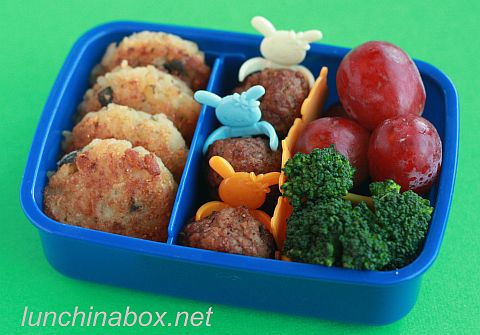
http://lunchinabox.net/2010/03/24/leftover-remake-risotto-cake-recipe/
This one looked particularly yummy and easy to make Feingold safe.
Thursday, April 29, 2010
Super Sloppies!
Today's lunch was a huge success so I'd love to share it. If you're vegetarian, leave out the meat. If you're gluten free, use GF rolls or bread
saute 1/2 an onion with a bit of butter till soft and yummy smelling (can skip the saute if you're in a hurry)
in a food processor add the onion, 3 carrots, 3 sticks of celery, and any other veggies you need to use up. Pulse till it's finely chopped. Add 1 can of drained black beans and barely pulse to start to break them up.
In the same pan as the onions, begin to brown 1 lb of ground beef (check your labels for color or solution)
When it's almost done, add the veggies and stir. While this is cooking, add a can of tomatoes or 1/2 cup catsup or whatever sloppy joe type base you want. Add spices like onion powder, garlic, parsley. Taste, then add salt to taste. We used about 1 tsp of salt. Add a bit of water if you need it.
Serve in the middle of approved rolls or on top of rice.
This was a huge hit even for my super sensory one who detects the faintest bits of onions or tomatoes. The texture that he expected from the ground beef really hid anything else that was in there.
We served our Super Sloppies in a roll with fluffy stuff (whipped cream, cottage cheese, homemade yogurt, fruit)
saute 1/2 an onion with a bit of butter till soft and yummy smelling (can skip the saute if you're in a hurry)
in a food processor add the onion, 3 carrots, 3 sticks of celery, and any other veggies you need to use up. Pulse till it's finely chopped. Add 1 can of drained black beans and barely pulse to start to break them up.
In the same pan as the onions, begin to brown 1 lb of ground beef (check your labels for color or solution)
When it's almost done, add the veggies and stir. While this is cooking, add a can of tomatoes or 1/2 cup catsup or whatever sloppy joe type base you want. Add spices like onion powder, garlic, parsley. Taste, then add salt to taste. We used about 1 tsp of salt. Add a bit of water if you need it.
Serve in the middle of approved rolls or on top of rice.
This was a huge hit even for my super sensory one who detects the faintest bits of onions or tomatoes. The texture that he expected from the ground beef really hid anything else that was in there.
We served our Super Sloppies in a roll with fluffy stuff (whipped cream, cottage cheese, homemade yogurt, fruit)
Subscribe to:
Posts (Atom)